Garden Design & Build · Est. 2011
Built to belived in.Grown tomature.
Heath & Hollow is a landscape design-build studio working across Toronto and the hills to the north. We draw stone, water, fire, and planting into outdoor rooms that settle into their setting and only improve with age.
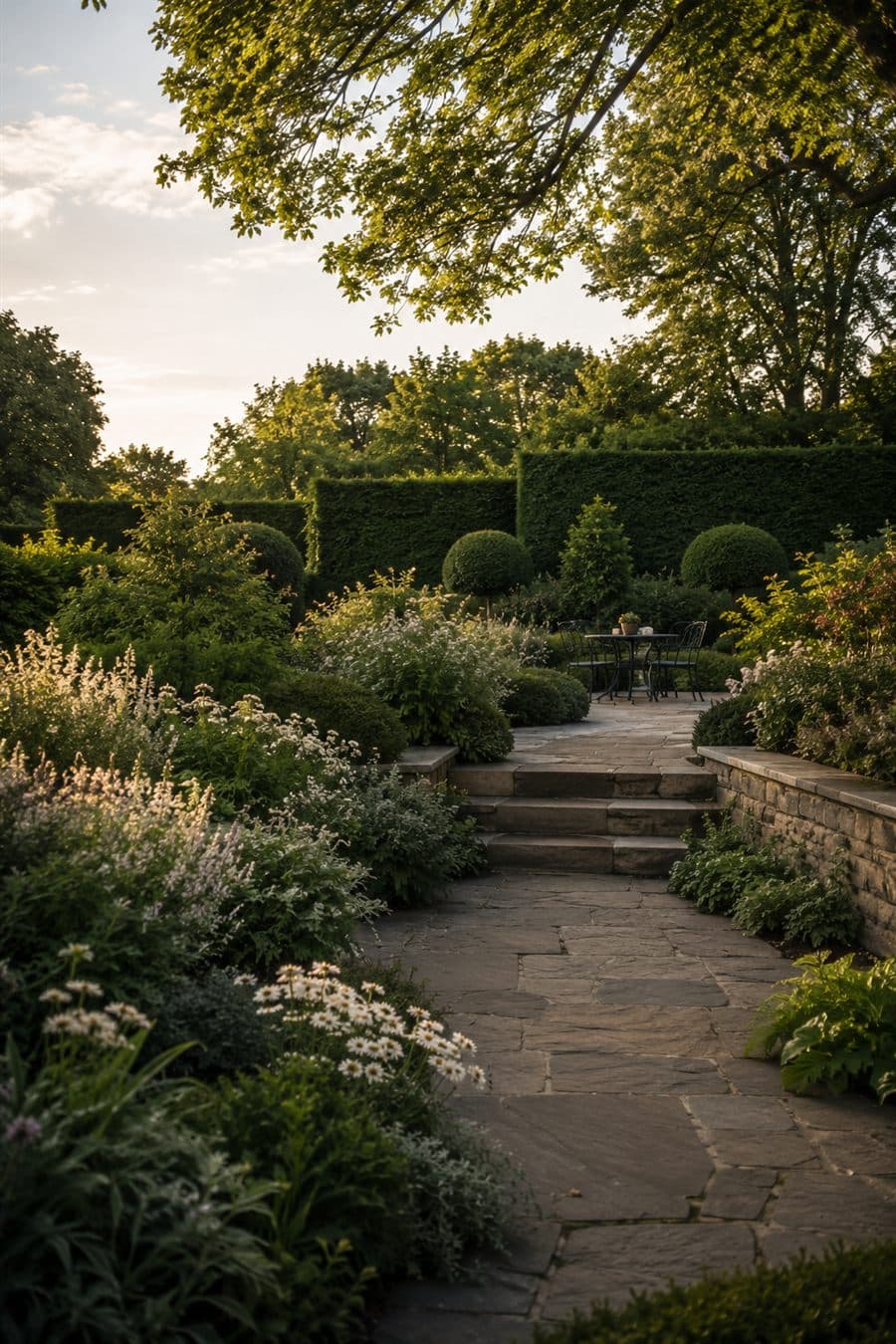
The studioWorking since 2011
We design for the garden it becomes, not the one we hand over.
One roof
No handoff. The people who draw your garden are the ones who set its stone and plant its beds, and we stay on to tend it after.
What we doSix disciplines
Designed and built under one roof.
One studio holds the whole garden, so the people who design it are the ones who build and keep it.
Garden Design
Master plans, planting design, and the working drawings a build is run from.
Stone & Terraces
Drystone walls, flagged terraces, steps, and edging, set by hand to outlast us.
Outdoor Kitchens & Fire
Kitchens, hearths, and fire tables built for the long evenings that pull a family outside.
Water
Plunge pools, rills, and reflecting basins, engineered to run quiet and stay clear.
Planting & Horticulture
Trees, hedges, and perennials chosen for this soil, this light, and how they read in ten years.
Lighting & Care
Low, warm lighting and the seasonal care that keeps a garden maturing the way it was drawn.
The workSelected gardens
A few gardens, a little while after.
We photograph our work a season or two on, once it has started to settle in. That is when a garden tells the truth about itself.
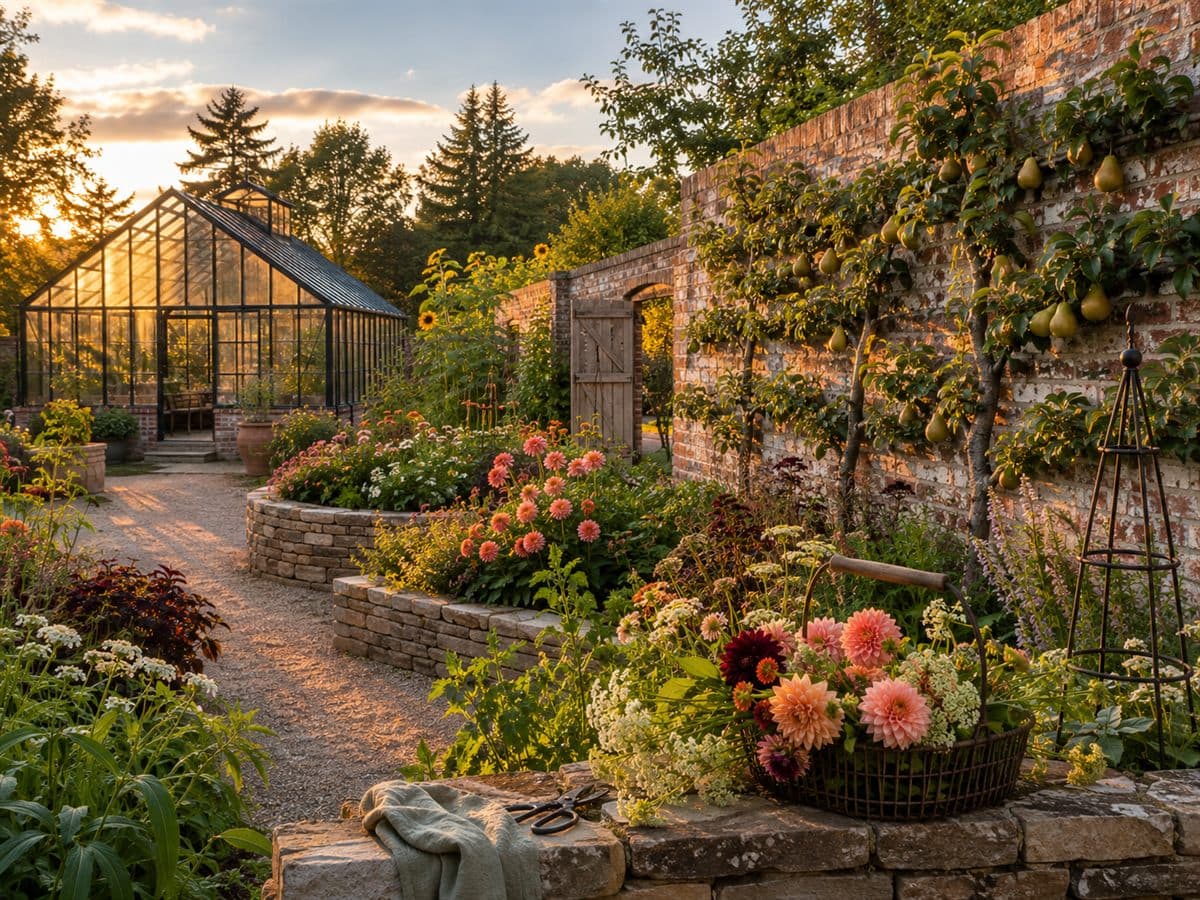 Project 01 · Caledon
A walled kitchen garden and glasshouse, set into a south slope.
An acre of espalier, cut flowers, and raised stone beds, sheltered by a reclaimed-brick wall and worked right through the year.
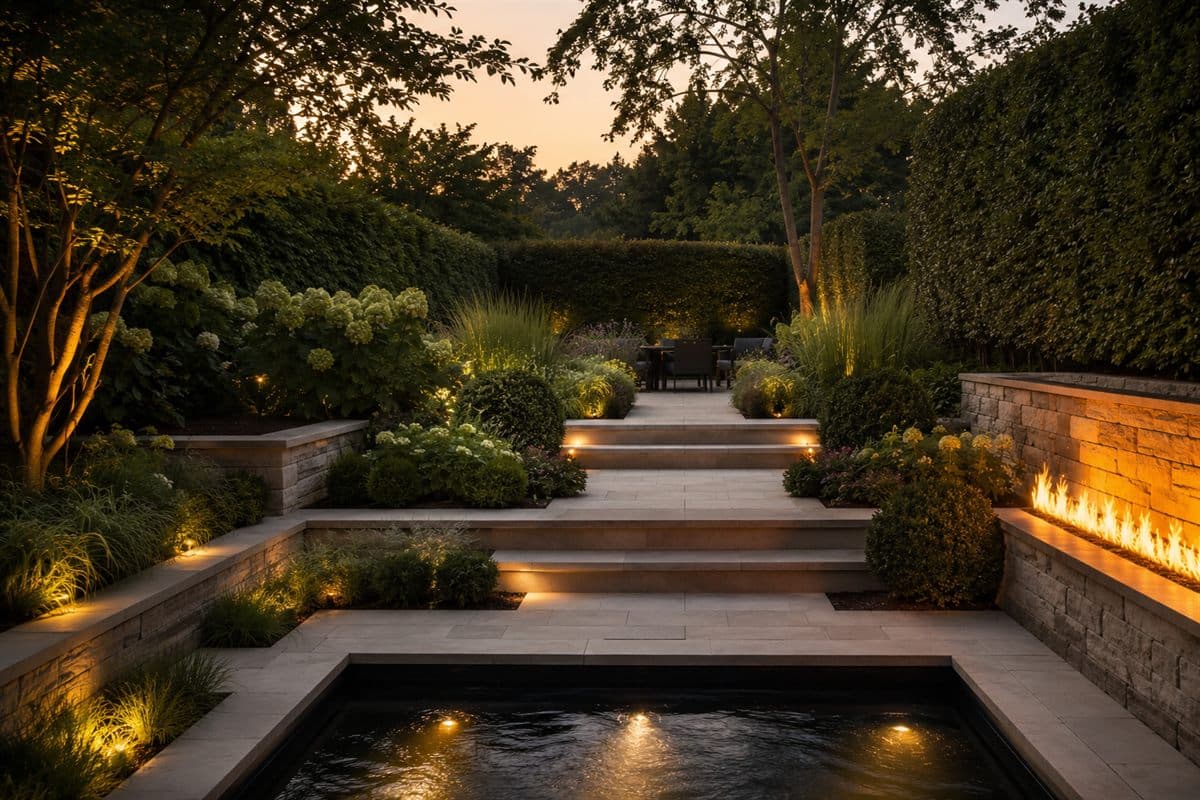 Project 02 · King
A limestone terrace stepping down to a black plunge pool.
Three limestone terraces follow the grade to a plunge pool and a low fire wall, with hornbeam closing the room on two sides.
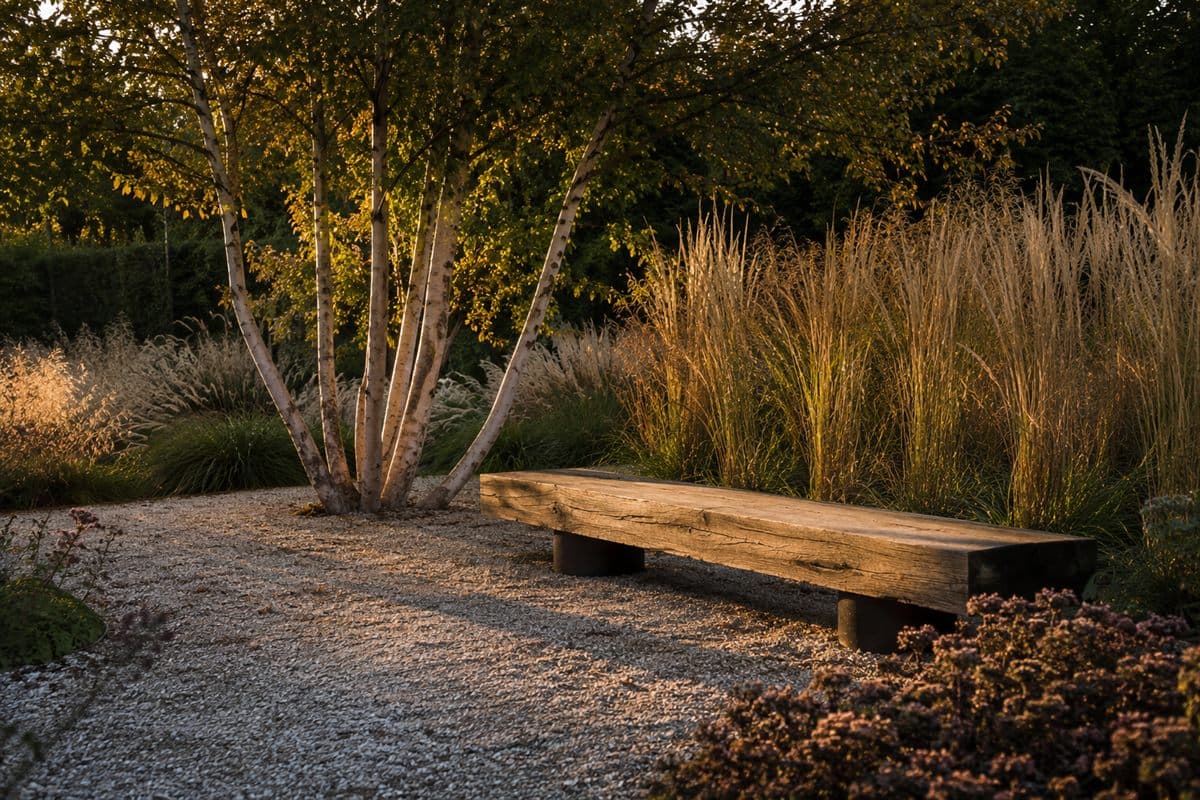 Project 03 · Mulmur
A gravel court planted under multi-stem river birch.
A loose gravel court of river birch and tall grasses, anchored by one long bench cut from reclaimed elm.
 Project 04 · Toronto
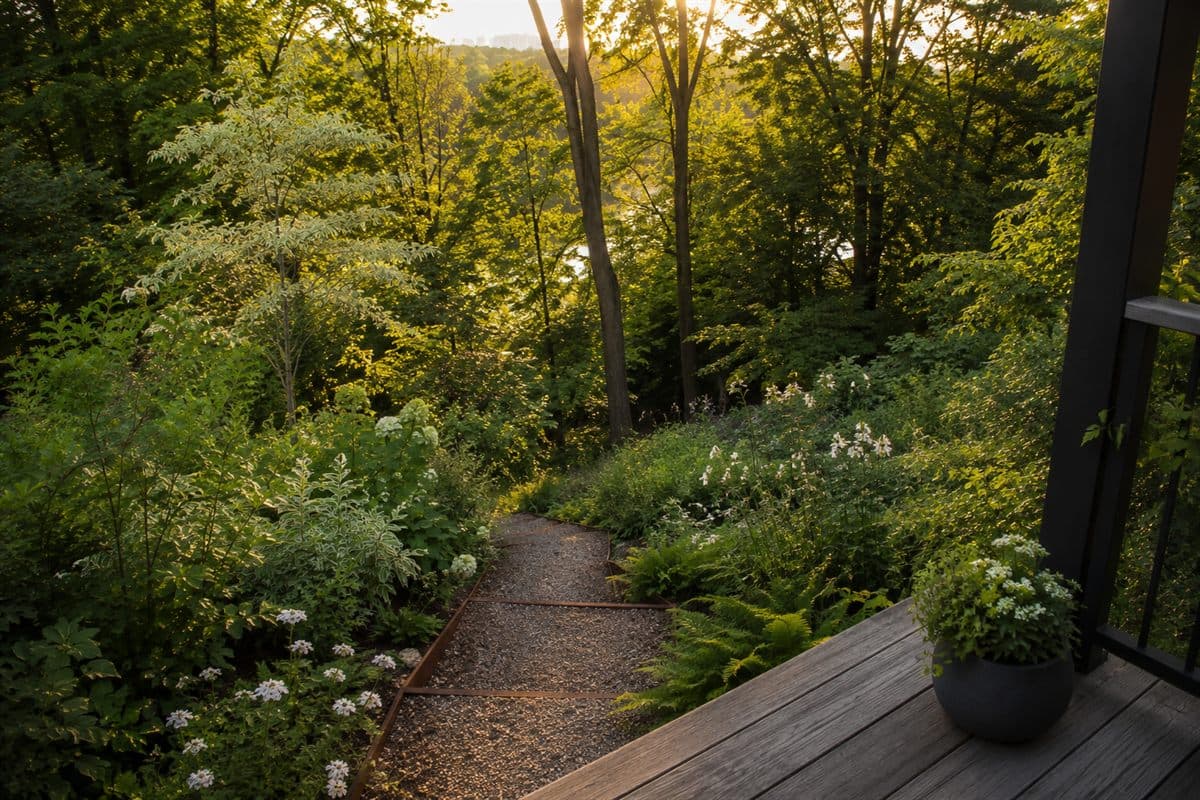
A naturalistic ravine garden on a city lot.
A steep Toronto ravine replanted as woodland edge, with a steel-edged path that lets you walk down into it.
The paletteMaterials & planting
A short list, used everywhere.
We keep a tight palette of stone, metal, timber, and plants, and repeat it, so a garden reads as one clear idea and not a catalogue.

Buff, split-face, for terraces, treads, and the tops of low walls.
All season
Edging, planters, and screens left to rust to a deep, settled amber.
All season
Bench tops, gates, and slatted screens, oiled, from local fallen stock.
All season
Clipped into hedges and pleached screens; holds a coppered leaf all winter.
Year-round
Multi-stem, for dappled shade in summer and peeling bark in the cold.
Winter interest
Upright and narrow; catches low light and moves in the smallest wind.
Late summerProcessFour moves, in order
How a garden gets made here.
The same four moves on every project, whether it is a courtyard or a country acre. The order is what keeps it honest.
Survey
We start in the ground: soil, drainage, light, slope, the views worth keeping and the ones worth hiding. Nothing is drawn until we understand what is already there.
Design
A master plan, then the construction drawings a build is run from. You see the garden in plan, in section, and in the planting, well before a stone is moved.
Build
Our own crews set the stone, run the services, and plant the beds. One standard from first cut to last, with the designer on site through the parts that decide how it reads.
Establish
The first three years decide what a garden becomes. We tend it through them, pruning and feeding and editing, until it can carry itself.
The best gardens look as if no one designed them at all.
They planted things I thought were far too small, and told me to be patient. Three summers on, I see exactly what they already saw.
They noticed the old path I always took to the shed and kept it. Nothing in the finished plan felt new, only finally settled where it belonged.
They built the wall dry, no mortar, and I worried it would heave by spring. Five winters on it sits exactly where they left it, true to the line.
QuestionsBefore you ask
The practical part.
Do you take on small city gardens, or only large properties?
Both. The smallest gardens often ask the most of a design. We take work where the budget and the brief leave room to do it properly, in town or out in the country.
What does a garden like this cost?
Most of our projects run from the high five figures into the low-to-mid six, depending on hardscape, water, and the size of the planting. You will get a real range at the first visit, before you have spent anything.
How long does it take?
Design is usually two to four months. A build runs from a few weeks to a full season, and we install March through November. Then the garden takes a few years to come into itself, which is rather the point.
Do you maintain the gardens you build?
Yes, and we would rather you let us. The first three years decide what a garden becomes, and the people who designed it are the ones who know how it is meant to mature.
Where do you work?
Toronto and the hills to the north: King, Caledon, Mulmur, Mono, and the country around them. Further afield for the right project.
Plan a project
Tell us about the garden you want to be standing in.
We take on a small number of gardens each season, so each one gets the attention it asks for. The best time to begin is a season before you would like to build.
- By email
- studio@heathandhollow.ca
- By phone
- (416) 555-0148
- The studio
- King City, Ontario · by appointment
What helps us help you
- Where it is. The address, or near enough that we can see the lot and the land it sits in.
- What you picture. A line or two on how you want to use the garden, and a few images you keep coming back to.
- When. The season you are hoping to build, and whether anything, a renovation or an event, sets the date.
- Roughly the budget. Even a wide range. It tells us, honestly, what we can do together.